
Personal development can feel overwhelming – an endless list of books, courses, and advice promising to transform your life. But real, lasting change rarely comes from consuming more information. It comes from a small number of consistent habits, practiced deliberately over time.
In this guide, you’ll discover 7 personal development habits that genuinely move the needle – not flashy hacks, but foundational practices that support growth across every area of your life, from career to relationships to mental wellbeing.
Why These 7 Habits Specifically
Personal development advice often suggests dozens of practices simultaneously, which makes it difficult to know where to actually start. The 7 habits in this guide were chosen because they’re foundational – each one supports and reinforces the others, creating a compounding effect across multiple areas of life rather than improving just one narrow skill.
You don’t need to adopt all 7 at once. In fact, trying to do so often backfires. Instead, treat this as a menu: start with one or two that feel most relevant to your current situation, and add more as they become natural.
1. Daily Reflection and Self-Awareness
Taking even 5-10 minutes each day to reflect on what happened, how you felt, and what you learned builds self-awareness – a foundation for almost every other area of personal growth. Without reflection, it’s easy to repeat the same patterns and mistakes without ever noticing them.
How to start: At the end of each day, ask yourself three simple questions: What went well today? What was challenging? What’s one thing I’d do differently? Writing brief answers, even just a sentence each, is enough to build the habit.
This habit pairs well with an end-of-day or weekly review process, giving you both daily and weekly checkpoints for reflection.
2. Setting Clear, Structured Goals
Vague intentions (“I want to grow personally”) rarely translate into actual change. Structured goals give your personal development efforts direction and a way to measure whether you’re actually making progress.
How to start: Use the SMART goals framework to turn a broad area of interest into a specific, measurable, achievable, relevant, and time-bound target. For example, “become a better communicator” becomes “practice active listening in at least one conversation daily for the next 30 days.”
3. Continuous Learning
Personal growth rarely happens by accident – it’s often the result of deliberately exposing yourself to new ideas, skills, and perspectives. This doesn’t require formal education; consistent, even small amounts of intentional learning compound significantly over time.
How to start: Dedicate just 15-20 minutes a day to learning something relevant to your goals – reading, a course, or practicing a skill. This connects directly to the power of small daily improvements: a small, consistent learning habit compounds into substantial knowledge and skill growth over months.
4. Consistent Physical Movement
Physical and mental wellbeing are deeply connected. Regular movement – not necessarily intense exercise, but consistent activity – supports better energy, mood, and focus, all of which directly affect your capacity for personal growth in other areas.
How to start: Rather than committing to an intense workout routine you might abandon quickly, start with a small, sustainable amount of daily movement – a short walk, light stretching, or a few minutes of activity. Build gradually from there, applying the same small-steps principle used in building self-discipline.
5. Intentional Relationship Building
Personal development is often framed as an individual pursuit, but strong relationships are consistently linked to greater wellbeing and life satisfaction. Intentionally nurturing relationships – rather than letting them happen passively – is a core habit of personal growth.
How to start: Set a small, specific habit, such as reaching out to one person you care about each week with a genuine message, or setting aside dedicated, distraction-free time with family or friends. Small, consistent effort here tends to matter more than occasional, large gestures.
6. Practicing Gratitude
Regularly noticing and acknowledging what’s going well, rather than focusing exclusively on problems or what’s missing, is associated with improved mood and resilience. This habit doesn’t ignore real challenges – it simply balances attention rather than letting it default entirely to what’s wrong.
How to start: Each day, write down (or simply think through) one to three specific things you’re grateful for. Specificity matters – “I’m grateful for a good conversation with my colleague about the project” is more impactful than a vague “I’m grateful for my job.”
7. Regular Progress Tracking
Personal development often happens gradually, in ways that are difficult to notice day to day. Without tracking, it’s easy to lose motivation, simply because the changes feel too slow or invisible in the moment.
How to start: Tracking your progress consistently increases your odds of long-term success. Choose a simple method – a journal, checklist, or habit tracker – to record your consistency with the other six habits, and review it weekly or monthly to see your actual growth over time.
Overcoming Common Obstacles to Personal Growth
Even with a clear list of habits, several common obstacles tend to get in the way of actually building them consistently.
Lack of Time
Many people assume personal development requires large blocks of dedicated time, which makes it easy to postpone indefinitely. In reality, each of the 7 habits above can be practiced in just a few minutes, similar to the broader principle behind small daily improvements – consistency matters more than duration.
Inconsistent Motivation
Relying purely on motivation to practice these habits leads to inconsistency, since motivation naturally fluctuates day to day. Building each habit into an existing routine, as described in our guide to building self-discipline over 30 days, creates a more reliable foundation than motivation alone.
Not Seeing Immediate Results
Personal development habits often produce gradual, hard-to-notice change rather than dramatic, immediate results. This is exactly why tracking your consistency matters – it reveals the cumulative progress that would otherwise go unnoticed in the day-to-day experience.
Trying to Change Everything at Once
A common pattern is attempting to overhaul multiple areas of life simultaneously after a moment of inspiration – a new diet, a new sleep schedule, a new morning routine, and a new learning habit, all starting on the same day. This rarely sustains itself, since it requires far more willpower than starting with one or two habits and building gradually.
A Suggested Sequence for Building These 7 Habits
While you can start with any habit that resonates most, here’s a suggested order that builds naturally on itself:
- Start with daily reflection to build self-awareness about where you currently stand and what matters most to you.
- Add progress tracking early, so you can capture insight from your reflection and monitor consistency as you add further habits.
- Introduce structured goals once you have clarity from reflection, giving your efforts clear direction.
- Layer in continuous learning and physical movement as supporting habits that build energy and capability for everything else.
- Finish with relationship building and gratitude, which often become easier to sustain once the foundational habits feel more automatic.
How to Start Building These Habits
Reading about 7 habits is far easier than actually building them. Here’s a simple, realistic approach:
- Choose just 1-2 habits to start with. Pick the ones that feel most relevant to your current challenges or goals.
- Start with the smallest possible version. A 2-minute reflection, a 5-minute walk, or a single gratitude sentence is enough to begin building consistency.
- Attach each habit to an existing routine. Linking a new habit to something you already do daily makes it far easier to remember and maintain.
- Track your consistency, not perfection. Focus on showing up regularly rather than doing each habit flawlessly every single time.
- Add the next habit once the first feels automatic. This typically takes 3-4 weeks, though it varies by person and by habit.
Expert recommendation: If you’re not sure where to start, daily reflection (habit #1) and progress tracking (habit #7) work especially well together, since reflection generates the insight and tracking captures it over time – creating a strong foundation for the other five habits.
Frequently Asked Questions
Do I need to practice all 7 habits every single day?
No. Even consistently practicing 2-3 of these habits can create meaningful change over time. The goal is sustainable consistency with a few habits, not a perfect daily checklist of all seven.
How long does it take to see real change from these habits?
Most people start noticing subtle shifts within a few weeks, with more substantial change becoming apparent after 2-3 months of consistent practice. This aligns with the broader principle that small daily improvements compound gradually rather than producing instant results.
Which habit should I start with if I’m completely new to personal development?
Daily reflection is often the easiest entry point, since it requires no special tools or significant time, and it naturally helps you identify which of the other habits would be most valuable for your specific situation.
What if I don’t have much time each day?
Each of these habits can be practiced in just a few minutes. The combined time for small versions of all 7 habits is often well under 30 minutes a day – the key is consistency, not duration.
How do these habits relate to staying motivated long-term?
These habits directly support sustained motivation, especially when pursuing long-term goals. For more specific strategies on maintaining motivation over time, see our guide on how to stay motivated when chasing long-term goals.
Can these habits help with both personal and professional growth?
Yes – none of these 7 habits are limited to one specific area of life. Reflection, learning, relationship building, and the other habits each apply across personal, professional, and even academic contexts, which is part of why they’re considered foundational rather than situational.
Conclusion: Small Habits, Lasting Change
Personal development doesn’t require a dramatic life overhaul – it requires a small set of consistent habits, practiced deliberately over time. These 7 habits work together to support growth across nearly every area of life, from career and skills to relationships and wellbeing.
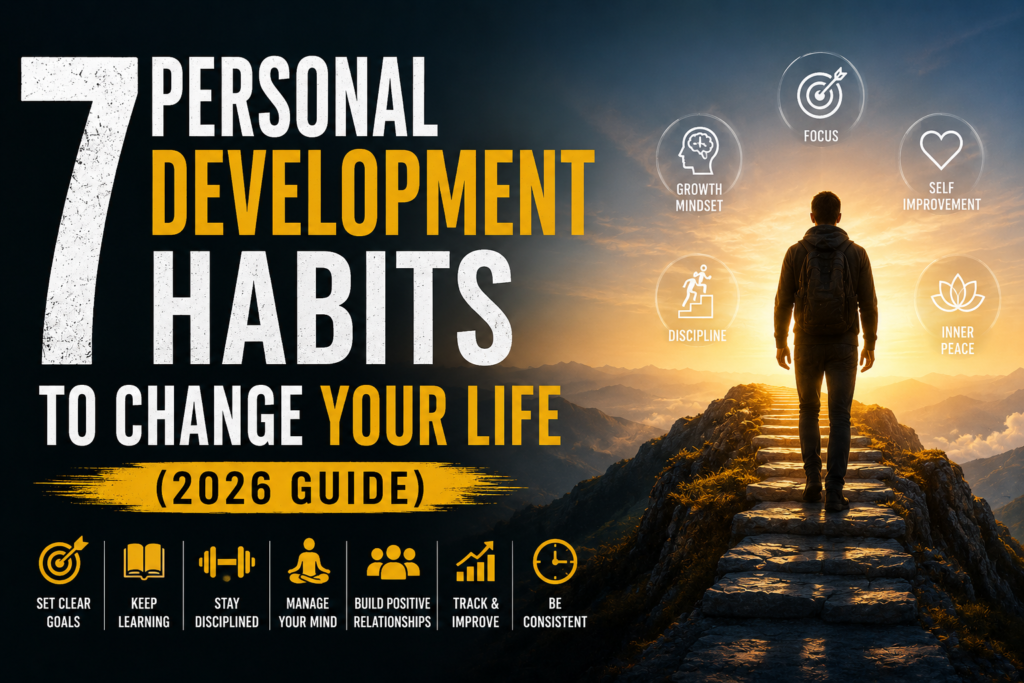
Here’s a quick recap of the 7 habits:
- Daily reflection: Build self-awareness through regular, brief reflection
- Structured goals: Use frameworks like SMART goals to give your growth direction
- Continuous learning: Dedicate small, consistent time to learning new skills and ideas
- Physical movement: Support energy and mood through regular activity
- Relationship building: Intentionally nurture connections rather than letting them happen passively
- Gratitude practice: Balance attention toward what’s going well, not just what’s missing
- Progress tracking: Make gradual growth visible and motivating over time
None of these habits require special equipment, significant time, or dramatic life changes. What they require is consistency – showing up for a small version of each habit, day after day, and trusting that the cumulative effect will be far greater than any single day’s effort suggests.
Do this one thing today: Choose just one of these 7 habits, and complete its smallest possible version before the day is over.